Guide
How to fix a lisp in a child
“Lisp” covers two quite different things, and telling them apart matters more than any exercise. One is extremely common, developmentally normal, and often sorts itself out. The other rarely goes away without help, and it is the one most parents have never heard of.
The short answer
An interdental lisp (“thun” for “sun”, tongue between the teeth) is normal up to about four and a half, and often resolves. A lateral lisp (a wet, slushy S with air escaping over the sides of the tongue) is not a normal developmental stage and rarely resolves on its own, so that one is worth a speech-language pathologist. Home practice helps both, and helps the first far more.
Work out which one it is
Ask your child to say “sun”, and listen and look.
| Interdental lisp | Lateral lisp | |
|---|---|---|
| Sounds like | “thun”, a soft TH in place of S | A wet, slushy S with spit in it |
| Tongue | Pokes forward between the teeth, visible | Sits flat; air escapes over the sides |
| How common | Very common in under-fives | Much less common |
| Resolves on its own? | Often, by around four and a half | Rarely |
| What to do | Practise at home; ask a professional if it persists past five | See a speech-language pathologist |
When a lisp is still normal
The S sound is typically mastered somewhere between four and six years old. A three-year-old with an interdental lisp is on schedule. Z, which uses the identical tongue position with the voice switched on, follows the same timetable.
So if your child is three or four and says “thun”, the honest answer is: practise gently, model it correctly all day, and do not make it a project. If they are past five and it has not shifted, that is the moment to get an opinion.
- The S sound. Full mouth-position guide, 150 practice words and three games
- The Z sound. The same tongue position with the voice switched on
- The TH sound. The sound your child is producing instead
A home routine for an interdental lisp
Five to ten minutes a day. Do not move up a step until the current one is right roughly eight times out of ten.
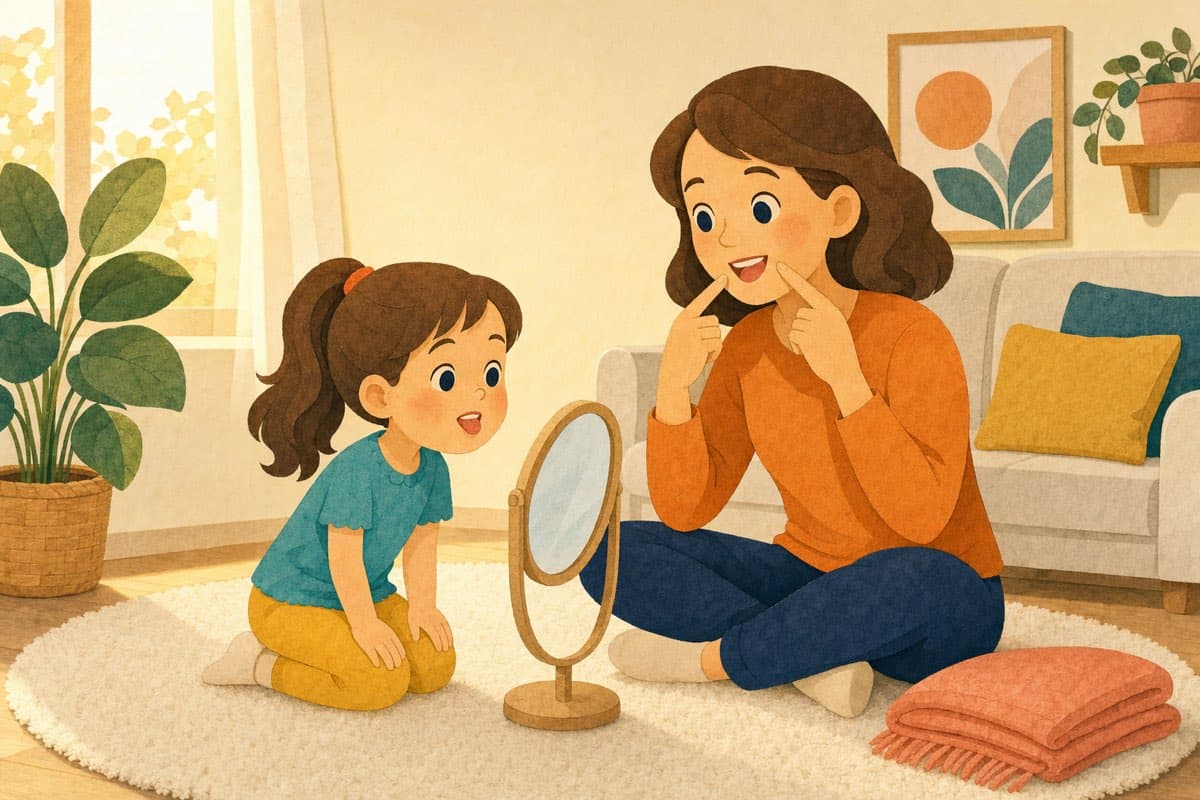
- 1Teeth together, smile wide. The single biggest fix. An S needs a narrow gap; an open mouth makes a lisp almost unavoidable. Practise the position with no sound first, in a mirror.
- 2Hide the tongue. Make it a game: “can you make the sound with your tongue hiding behind your teeth?” Never “stop sticking your tongue out”, which makes it a telling-off.
- 3Long snake hiss. Twenty long sssss sounds. No words yet. This is where the motor pattern is learned, and it is the step everyone skips.
- 4Feel the air. Hold a finger in front of your child's mouth. A correct S is a thin, cold stream. A lisped S is wide and warm. Children find this genuinely interesting.
- 5Borrow the T. Say a long “t-t-t-t” then let it blur into “sss”. The T already puts the tongue in almost the right place, so this shortcut works surprisingly often.
- 6Then short words, then two-word phrases, then sentences, then conversation, in that order, over weeks.
What not to do
- Do not correct in conversation. “Say it properly” teaches a child that talking to you is a test. Repeat the word back correctly instead and move on.
- Do not practise for twenty minutes. Five is plenty. The long session is why tomorrow's is a fight.
- Do not work on S and R at the same time. One sound at a time, always.
- Do not use exercises that have nothing to do with speech. Blowing whistles, licking peanut butter off lips and general “tongue exercises” are popular online and there is no good evidence they change speech sounds. Practise the actual sound instead.
- Do not assume a tongue tie is the cause. It occasionally matters; usually it does not, and an S lisp is rarely explained by it. Get an opinion before agreeing to any procedure aimed at speech.
How long it takes
For an interdental lisp in a four- or five-year-old with daily practice, the isolated sound often comes within a few weeks. Getting it into everyday conversation takes months, and that gap is normal. Children can produce a perfect S in a word list long before it appears in running speech.
Track it rather than guessing. Once a week, ask for the same ten S words and count how many are right. If the number has not moved in six weeks of honest daily practice, stop and get a professional opinion. Something in the technique is probably off, and one appointment will usually find it.
Practice these sounds
Free word lists, mouth-position guides and games. No app needed.
Help Me Talk is a practice app, not a diagnosis or a replacement for a licensed speech-language pathologist. If you are worried about your child’s speech, talk to your doctor or an SLP. This app is for the practice in between.
Questions parents ask
- At what age should a lisp be gone?
- The S sound is typically mastered between four and six. An interdental lisp, the “thun” for “sun” kind, is generally considered normal up to around four and a half. If it is still there at five, or if it is a wet lateral lisp at any age, get it assessed.
- Will my child grow out of a lisp?
- An interdental lisp often resolves on its own. A lateral lisp, the slushy wet one, rarely does, because it is a different tongue posture rather than a delayed version of the right one. That is why identifying which kind you are dealing with is the first step.
- What causes a lisp?
- Usually nothing more than the tongue settling into a habit while the sound is still developing. Sometimes a bite or dental issue contributes, and occasionally prolonged dummy or thumb use plays a part. Tongue tie is often blamed and is rarely the explanation for an S lisp.
- Can you fix a lisp at home?
- An interdental lisp, often yes, with daily practice and a lot of patience. A lateral lisp usually needs a speech-language pathologist, because the fix involves changing where the air goes, which is hard to teach without someone who can hear exactly what is happening.
- Do tongue exercises help a lisp?
- Non-speech exercises like blowing, licking and tongue push-ups do not have good evidence behind them for changing speech sounds. Practising the actual sound in words, with feedback, does. Spend the five minutes on that.
Keep reading
- The S sound: how to teach it
- How to do speech therapy at home
- Speech therapy for older kids and teenagers
- The 18-month speech checklist
- The 2-year-old speech checklist for your child
- The 3-year-old speech checklist for your child
- The 4-year-old speech checklist for your child
- The 5-year-old speech checklist
Last updated 25 July 2026.