Roundup
Best articulation apps for kids
Articulation is the narrow, practical corner of speech therapy: one sound at a time, hundreds of repetitions, working up from the sound alone to real conversation. It is repetitive by design, which is exactly why an app is a reasonable tool for it. These five are the ones worth considering for a child.
The short answer
If you are the parent running the practice, Help Me Talk (our app) is the one to start with: it covers 30 sounds with over 6,000 practice items, listens to each attempt and scores it, works on Android, and is the cheapest at $49.99 a year. If you are working alongside a speech therapist, or you are one, Articulation Station Hive is the more complete tool and the one most clinics already use, at roughly 1.7 times the price, Apple only, with the adult doing the judging. Speech Blubs is for a toddler building first words rather than for targeted sound work.
US prices for iOS and Android. Prices vary by country; your store shows the price before you subscribe. The new prices are active on Google Play and take effect on the App Store on October 8, 2026.
What actually matters in an articulation app for a child
Four things, and most reviews ignore three of them.
- Does it cover the sound you need? Some apps sell sounds individually. Check the one your therapist named is included before you pay.
- How much material per sound? Ten words gets boring in two sessions. Practice needs hundreds of repetitions, which means hundreds of items.
- Does it work up the levels? Sound alone → words → phrases → sentences → conversation. An app that only does single words leaves you stuck at level two.
- Does it listen? This is the big divide. Most apps show a word and let an adult judge. A few actually score the attempt, which matters when the adult is not sure what a correct R sounds like.
The comparison
| App | Sounds | Listens & scores? | Platforms | Yearly price |
|---|---|---|---|---|
| Articulation Station Hive | Consonants, vowels, blends, vocalic R | No, the adult judges | iPhone, iPad, Mac | About $83.99 (parent tier, billed yearly) |
| Help Me Talk | 30, including vowels | Yes, a score per attempt | iPhone, iPad, Android | $49.99 |
| Otsimo | Sound practice with recognition | Yes | iOS, Android | About $53.99, or $119.99 lifetime |
| Speech Blubs | Sound and word libraries | Voice-activated, not scored | iOS, Android | $59.99 |
| Mio | Early-language games | No | iOS, Android | In-app purchase |
Best for a parent doing the practice: Help Me Talk
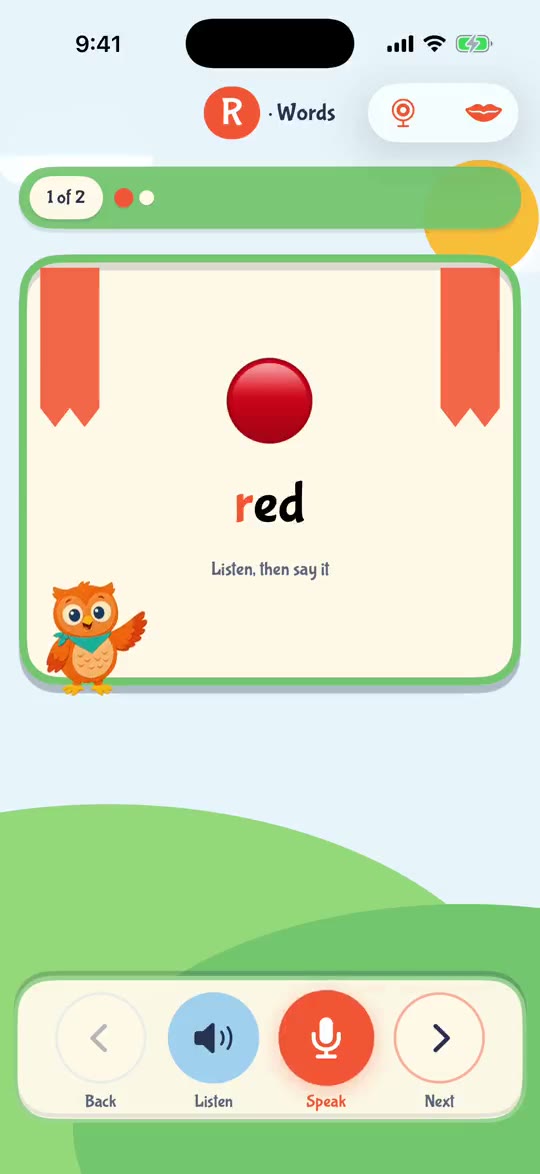
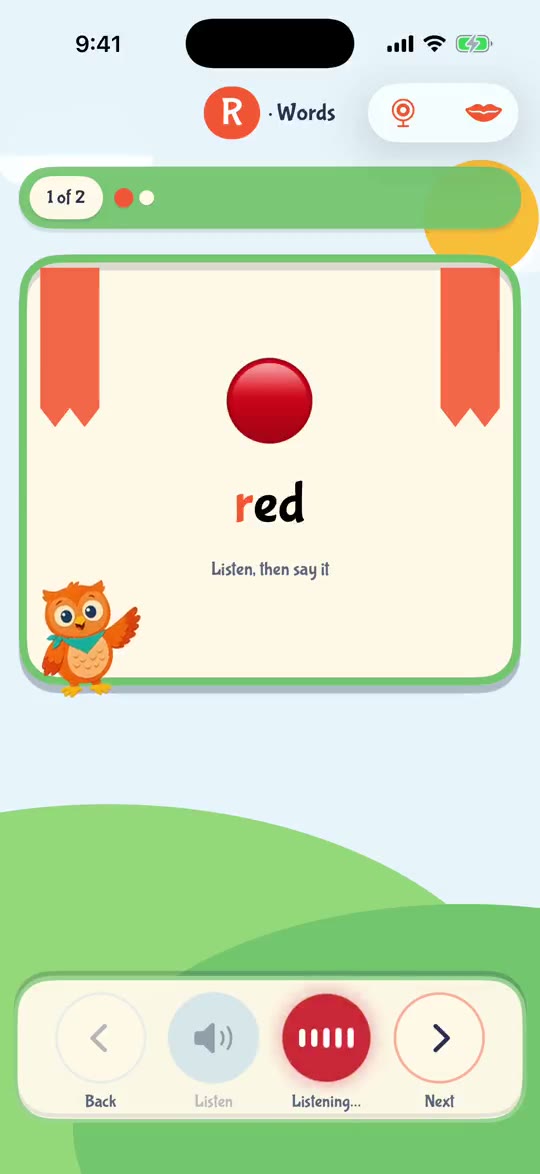
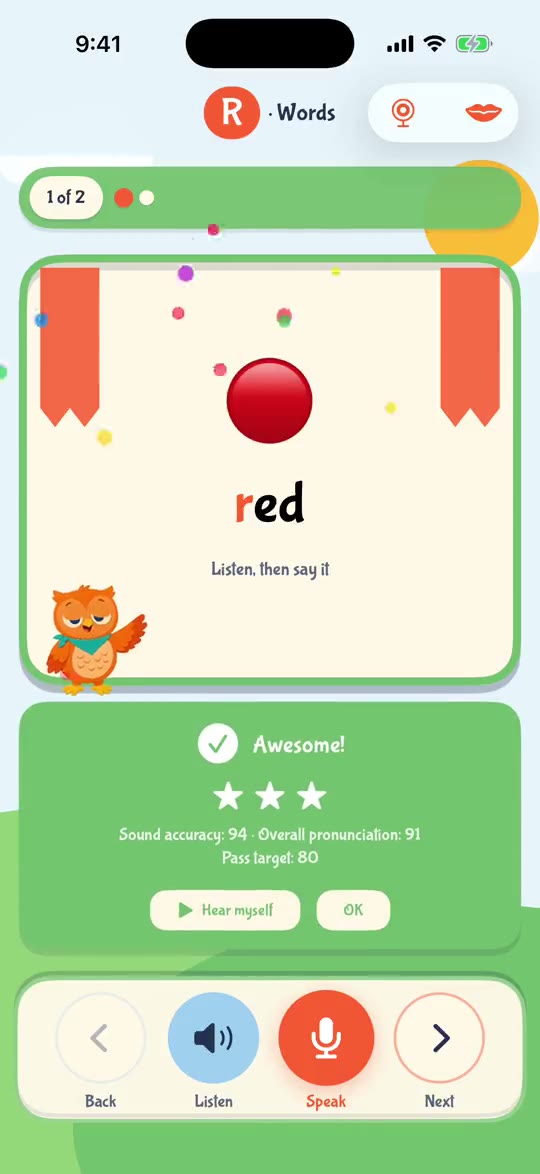
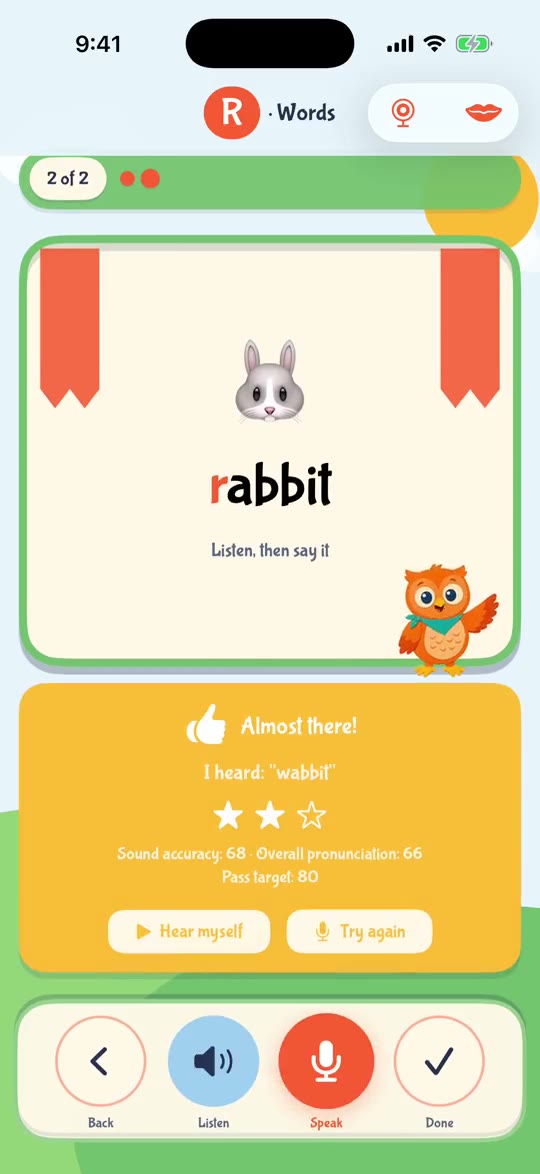
Our app. The distinguishing feature is that your child says the word out loud and the app scores how close the pronunciation was, then tracks that score for that sound over weeks and months. Most articulation apps put that judgement on the adult sitting next to the child. That is fine if you know what a correct R sounds like, and much harder if you do not.
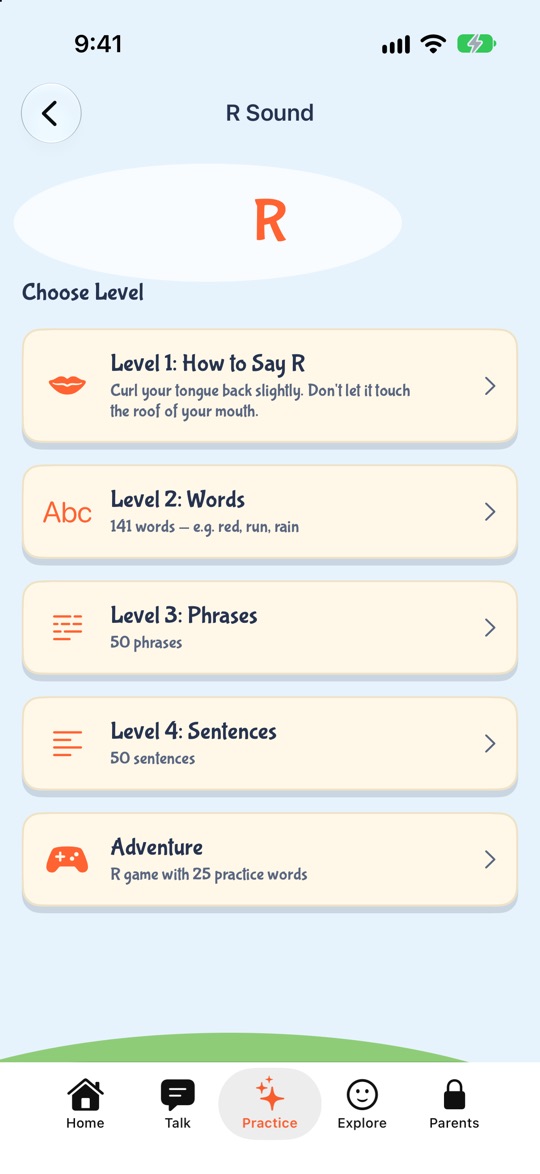
Underneath there are 30 sounds, each with a recorded lesson and mouth-position guidance, and a bank of over 6,000 words, phrases and sentences dealt out so your child sees new material rather than the same ten cards. At $49.99 a year it is the cheapest annual price in this comparison, and it runs on Android as well as iPhone and iPad.
The honest weaknesses: it has 36 US App Store ratings, because it is a small independent app rather than a funded one. It is English only. And the detailed scoring needs a connection. Offline it still records the practice, it just cannot show a number.
- Strong: scores each attempt, 30 sounds, 6,000+ practice items, works on Android, cheapest yearly
- Weak: small rating base, English only, detailed scoring needs a connection
- Choose it if: you are a parent doing the daily practice and you want the app, not you, to be the judge
Inside the app
See a practice session, step by step
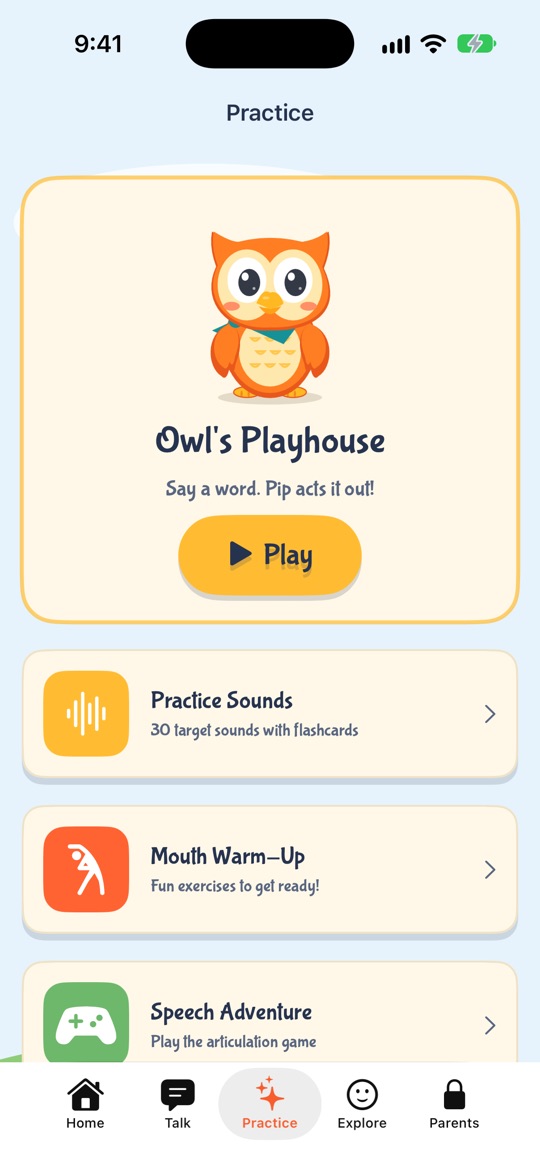
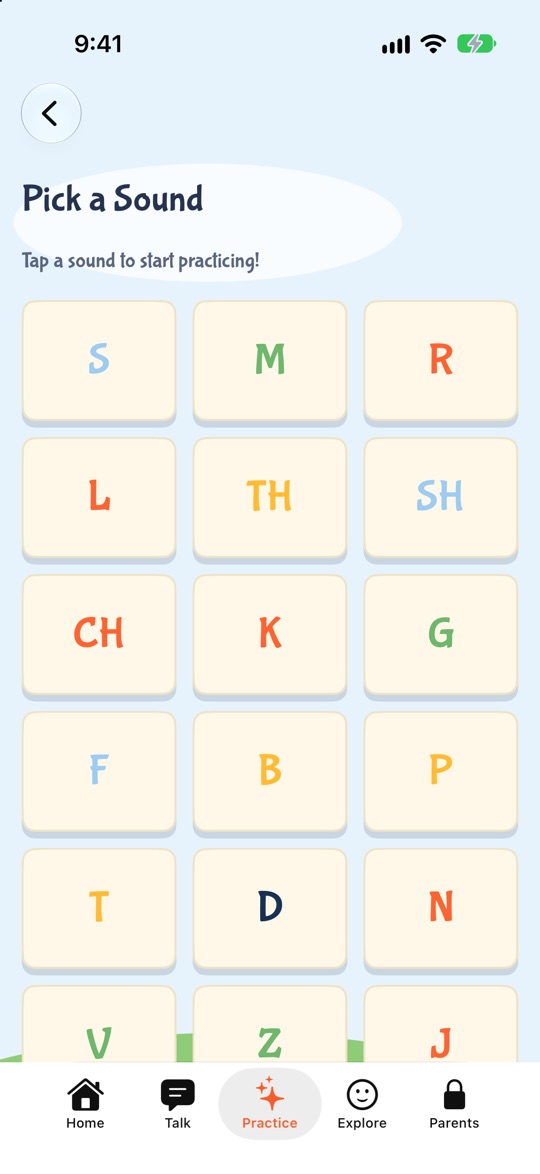
This is the R sound in Help Me Talk. Your child says the word, the app scores the attempt and asks for another try when the sound slips.
1. Open Practice Sounds
30 target sounds, each with words, phrases and sentences.
Try it with your child. Free to download.
Best alongside a therapist: Articulation Station Hive
Little Bee Speech has been making articulation apps longer than almost anyone, and Hive is the current version: 17 activity types covering consonants, vowels, blends and vocalic R, working from isolation right through to conversation level. If you walk into a speech clinic, this is the app most likely to be on the iPad. It heads our roundup of speech therapy apps for iPad, which also covers which iPadOS version each app needs.
Two things make it the professional choice: the completeness of the level structure, and the record-keeping, which is built for someone tracking multiple students. Both of those also make it more app than most parents need.
The parent tier runs about $6.99 a month billed annually, or $9.99 month to month, with a 14-day trial. It is Apple-only: iPhone, iPad and Mac, with no Android version.
- Strong: the most complete level structure available, trusted by SLPs, excellent data tracking
- Weak: no Android, the priciest for what a single family needs, and the adult has to judge every attempt
- Choose it if: you are an SLP, or a parent working closely with one who uses it too
Best lifetime option: Otsimo
Otsimo also uses speech recognition to check attempts, and it comes from a company with real credibility in autism education. The lifetime option at $119.99 is genuinely appealing if you expect to use it for several years rather than several months.
Weigh two facts before buying: its US App Store rating is 3.36 from 180 ratings, the lowest here by some distance, and the iOS app's last update was May 2025, over a year before this was written. Neither is disqualifying, but both are worth knowing.
Best for first words: Speech Blubs
Speech Blubs is the biggest name in children's speech apps, with 53,574 US ratings at 4.62 stars, and it does what it does very well: video modelling, where your child copies clips of real children saying words. For a two- or three-year-old building first words, that is a strong mechanism.
It is a weaker fit for targeted articulation work with an older child, because the structure is built around exploring themed word libraries rather than driving one sound up through the levels. At $59.99 a year it also costs 50% more than Help Me Talk. If your child is four or older and working on one specific sound, this is not the tool.
Early language rather than articulation: Mio
Included because it appears on every list of speech apps and parents ask about it. Mio is a well-made early-learning app for ages one to eight, in seven languages, built with educators and speech therapists. It is not an articulation tool and does not pretend to be. If your child needs sound-by-sound work, look at the four above.
Try it before you pay for anything
Every sound on this site has a free page with the mouth-position instructions, an audio clip, the full word list grouped from easiest to hardest, phrases, sentences and three games. That is the same material any of these apps would give you. What the apps add is feedback, structure and record-keeping, not the words themselves.
Work through a week of free practice first. You will learn more about which sound to target and whether your child will sit for it than any review can tell you.
- The R sound: the latest sound and the most searched
- The S sound: lisps
- The L sound, TH, SH, CH
- The F sound and the V sound: the same lips, voice off then on
- The J sound: when “jump” comes out “dump”
- All 30 sounds
Practice these sounds
Free word lists, mouth-position guides and games. No app needed.
Questions parents ask
- What is the best articulation app for parents?
- Help Me Talk if you want the app to score your child's attempts rather than judging yourself, and Articulation Station Hive if you are working alongside an SLP who already uses it. The deciding question is usually whether you are confident judging a correct production yourself.
- Which articulation app do children's speech therapists use?
- Articulation Station Hive from Little Bee Speech is the one most commonly found in clinics. It is built for caseload management, with multiple students and detailed data, which is exactly what a clinician needs and more than most families do.
- Is there an articulation app for kids on Android?
- Help Me Talk, Otsimo, Speech Blubs and Mio all have Android versions. Articulation Station Hive does not: it is iPhone, iPad and Mac only. Android narrows the field considerably.
- Can an app tell if my child said the sound correctly?
- Some can. Help Me Talk and Otsimo both use speech recognition to score attempts. Most other articulation apps display the word and leave the judgement to the adult. Automated scores vary with background noise and microphone distance, so treat the trend over weeks as the real signal, not any single number.
- How many practice words does my child need?
- More than most apps ship with. Effective articulation practice runs to dozens of correct repetitions per session over weeks, so a bank of ten words per sound runs out almost immediately. Look for hundreds of items per sound, at word, phrase and sentence level.
Keep reading
- Best apps for childhood apraxia of speech
- Articulation Station alternative
- How to do speech therapy at home
- Apps that listen to your child’s speech
- Otsimo alternative
- Best speech therapy apps for iPad
- Vocalic R, and why one R is not enough
- Best apps for dysarthria, for adults and for children
Last updated 16 October 2026.