Guide
Is my 2-year-old a late talker?
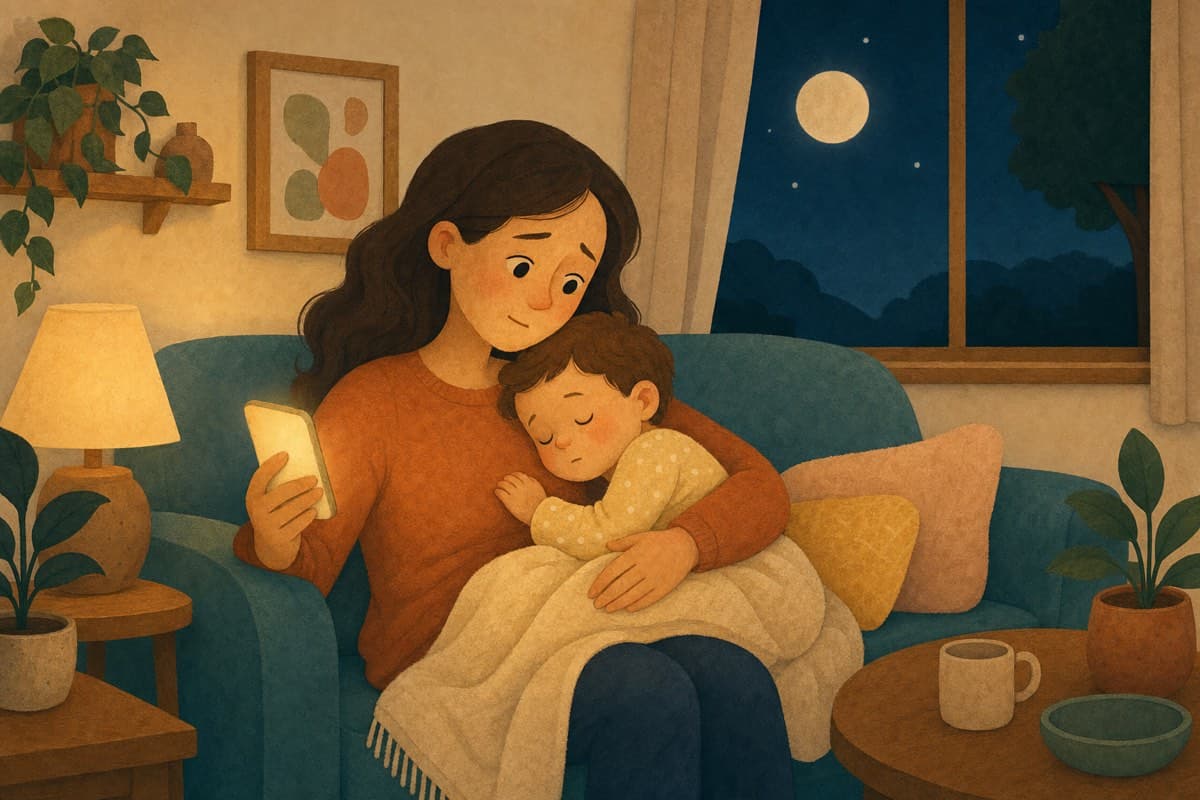
If you are here at eleven at night counting your child's words, you are in very good company. Late talking is one of the most common worries parents bring to a doctor, and it has a clear definition, a clear next step, and a lot of noise around it that is worth clearing away first.
The short answer
A late talker is a two-year-old with fewer than about 50 words who is not yet putting two words together, but who understands well and is developing normally in every other way. Roughly one in five two-year-olds fits that description. Most catch up, but nobody can tell you in advance whether yours will, which is why an assessment beats waiting.
The two-part test
Clinicians look at two things at 24 months, and both matter:
- 1Vocabulary. Roughly 50 words. Count anything your child uses meaningfully and consistently, including approximations, so “ba” for ball counts. Animal noises count. Words in a second language count.
- 2Combinations. Two words used together to mean something: “more milk”, “daddy go”, “no bed”. This is the one that matters more. A child with 40 words who combines them is in better shape than a child with 60 who never does.
What is not part of the definition
“Late talker” describes a specific picture: expression is behind, everything else is fine. If any of the following are also true, it is a different conversation and worth an appointment sooner rather than later.
- Understanding is behind too. If your child does not follow simple instructions or point to things you name, that changes the picture significantly.
- Skills have gone backwards. A child who had words and lost them should be seen promptly. This one is not a wait-and-see.
- Little eye contact, pointing or shared attention. Not talking is one thing. Not communicating at all, with no pointing and no showing you things, is another.
- Family history of speech, language or reading difficulties, which raises the odds that this is not a phase.
- Frequent ear infections or a hearing concern. Hearing is the first thing worth ruling out, and it is a quick test.
- Still behind at three. Most late talkers catch up, but the ones who have not by their third birthday are the group worth acting on. The 3-year-old speech checklist is the next checkpoint.
Why “wait and see” is bad advice
It is the most common thing parents get told, and it is not wrong about the odds, because a lot of late talkers do catch up. Where it goes wrong is what it assumes checking costs you.
Nobody can identify which late talkers will catch up. The children who do not are the ones who benefit most from starting early, and by the time it is obvious which group your child is in, you have lost a year of the period when help works best. An assessment is one appointment. If everything is fine, you get told that, and you stop lying awake.
So: keep doing the things below, and book the appointment. They are not alternatives.
Eight things that help, starting tonight
None of these need special materials, and they work because they change how much language your child hears aimed directly at them.
- 1Narrate everything. Say what you are doing while you do it. “Mummy's washing the cup. Cup. Wet cup.” It feels ridiculous and it works.
- 2Cut your sentences in half. Talk one step above where your child is. If they use single words, you use two. Long sentences give a late talker nothing to copy.
- 3Wait longer than feels natural. Ask, then count to ten in your head. Most adults fill the gap in two seconds. That gap is where a child's turn was going to go.
- 4Make them ask. Put the favourite snack where it can be seen and not reached. Give one piece at a time. Manufactured reasons to communicate are worth more than a hundred flashcards.
- 5Offer a choice out loud. “Milk or water?”, holding both up. A choice is a much easier first word than an open question.
- 6Repeat back, corrected, without correcting. Child says “ba”. You say “Ball! Big ball.” Never “say it properly”.
- 7Read the same book over and over. Repetition is what builds words. Let them finish the line they know.
- 8Turn the background noise off. Speech is much harder to pick out of a room with a TV on. The quiet gives your child room to hear you.
Where an app fits, and where it does not
For a two-year-old who is not talking yet, a screen is not the main event. The eight things above matter more, and any app that suggests otherwise is overselling.
What an app can genuinely do at this age is give you something to talk about together: pictures to name, a sentence to build side by side, a feeling to point at. Help Me Talk's picture boards are built for exactly that: you sit together, tap a picture, hear the word, and say it back. The pronunciation practice becomes useful later, once your child is copying sounds on request, usually somewhere around three.
Practice these sounds
Free word lists, mouth-position guides and games. No app needed.
Help Me Talk is a practice app, not a diagnosis or a replacement for a licensed speech-language pathologist. If you are worried about your child’s speech, talk to your doctor or an SLP. This app is for the practice in between.
Questions parents ask
- How many words should a 2-year-old have?
- Around 50, and ideally starting to combine two of them. Count generously. Approximations, animal noises and words in every language your child hears all count. Write them down over a week rather than guessing from memory.
- What percentage of late talkers catch up?
- Most do, and studies put the figure in the majority, but the children who do not catch up are the ones who most need early help, and there is no test that tells you in advance which group your child is in. That asymmetry is the whole argument for getting assessed rather than waiting.
- Should I be worried if my 2-year-old only says a few words but understands everything?
- Strong understanding is genuinely reassuring, and it is the single best predictor in this picture. It does not mean skip the assessment. It means you are more likely to walk out of it reassured.
- Can too much screen time cause late talking?
- Screen time is associated with less talking, mainly because it replaces the back-and-forth conversation that builds language rather than because screens are toxic. A programme playing in the background is worse than it looks, because it makes speech harder to pick out. Watching something together and talking about it is a completely different activity.
- Does a dummy or pacifier cause speech delay?
- Constant all-day use limits how much babbling and practice happens, and prolonged use can affect the bite, which affects some sounds. Occasional use for sleep is not the problem. If it is in most of the day, cutting it back is worth doing.
Keep reading
- The 2-year-old speech checklist
- Speech milestones by age
- Best speech apps for late talkers
- The 3-year-old speech checklist
- The 18-month speech checklist
- The 4-year-old speech checklist for your child
- The 5-year-old speech checklist
- Apps that listen to your child’s speech and score it
Last updated 24 August 2026.